
February 24th, 2026
Roads are the backbone of global infrastructure, used by millions of people every day. Traditionally, these physically engineered structures depend heavily on oil-based binders like bitumen to provide strength and long-term endurance. However, as the industry faces growing concerns around pollution and waste, a new course of exploration is surfacing – plastic-modified asphalt and modular designed assemblies.
Two Approaches to Plastic Roads
Plastic-Modified Asphalt
Many current techniques involve the method of mixing shredded plastic scrap directly into asphalt to replace bitumen. The plastic acts as a binder to improve flexibility and resist rutting and cracking. This approach integrates the plastic straight into existing traditional paving jobs and enhances structural integrity.
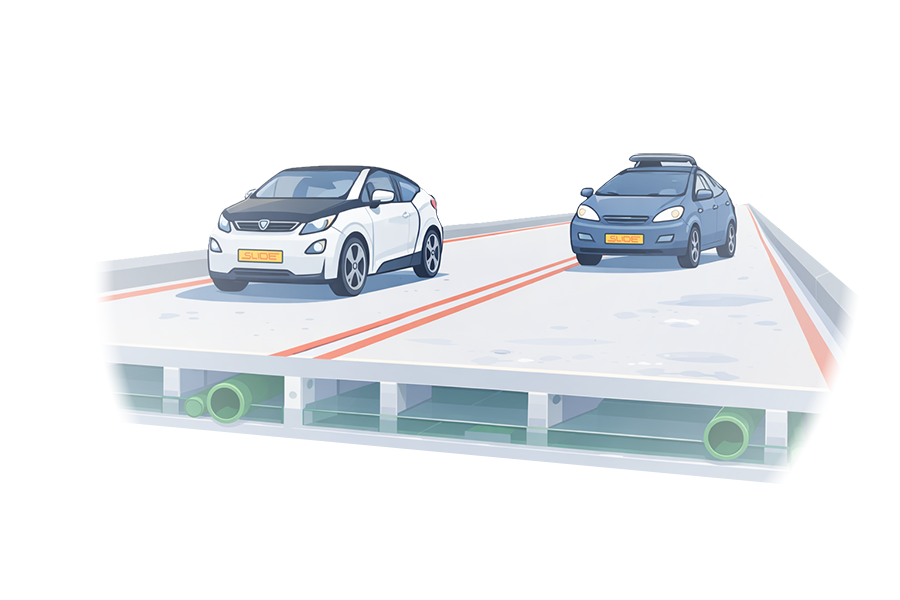
Modular Road Systems
A new emerging alternative entails manufacturing interlocking panels using recycled plastics from post-consumer polyethylene (PE) and polypropylene (PP). These hollow engineered components are made possible through high-precision injection molding. Unlike plastic-modified roads, this setup does not mix plastic into pavement. Instead, it replaces portions of existing structures with lightweight assemblies that include integrated drainage channels, utility housing, reducing material usage and would speed up installation.
Materials
The following materials are currently driving the transition from landfills to roadways:
Recycled PET
Sourced primarily from leftover bottles, PET (Polyethylene Terephthalate) is utilized to enhance stability and rigidity in load-bearing scenarios.
Alternative Sustainable Solutions
Incorporating End-of-Life Tires (EOLT) adds elasticity and toughness to the mix, helping roads withstand temperatures fluctuations without cracking.
Material Research Initiatives
Nanocellulose wood blends and other renewable options are currently being tested to further improve reinforcement and reduce the overall carbon footprint.
Reality of Handling Recycled Material
For manufacturers, when switching over from a virgin resin to a landfill-recovered material introduces variables that directly affect infrastructure reliability. The road must withstand traffic loads, fluctuating temperatures and long-term environmental exposure.
Common processing issues include:
Tooling Wear
Abrasive particles, fillers and residue can travel through recycle streams. In large scale roadway production, this could accelerate wear on screws, barrels and molds. Excessive fatigue does not only hurt manufacturing efficiency, but it can also compromise dimensional accuracy where proper fitting and assembly is vital. Maintenance and high-quality MRO solutions are crucial, especially in large-volume infrastructure projects.
Dimension Inconsistency
Recycled resins often vary in shrink rates, affecting part tolerances and compromise fitting of interlocking road panels. For segmented roadway systems, closely monitoring temperature and pressure is vital to ensure consistent load transfer across vast expanses.
Outgassing
There is an elevated risk of volatile outgassing as such matter may contain dampness or filtrates. This leads to exterior and interior defects that reduce fatigue resistance and load-bearing properties over time.
Process Instability
Unpredictable characteristics like melt flow and temperature sensitivity can cause warpage, short shots, flashing and defects that require frequent adjustments during production. Because these pieces are made to distribute traffic weight, process stability correlates directly to performance.
Benefits of Plastic Roads
Despite the processing challenges, plastic roads offer numerous attractive advantages that continue to drive development and adoption.
Enhanced Performance
These roads are flexible with a smooth yet strong overlay, engineered to resist fatigue, cracking and temperature changes. Being non-porous, the surface is immune to water absorption and extremely resistant to abrasion and erosion.
Support a Circular Economy
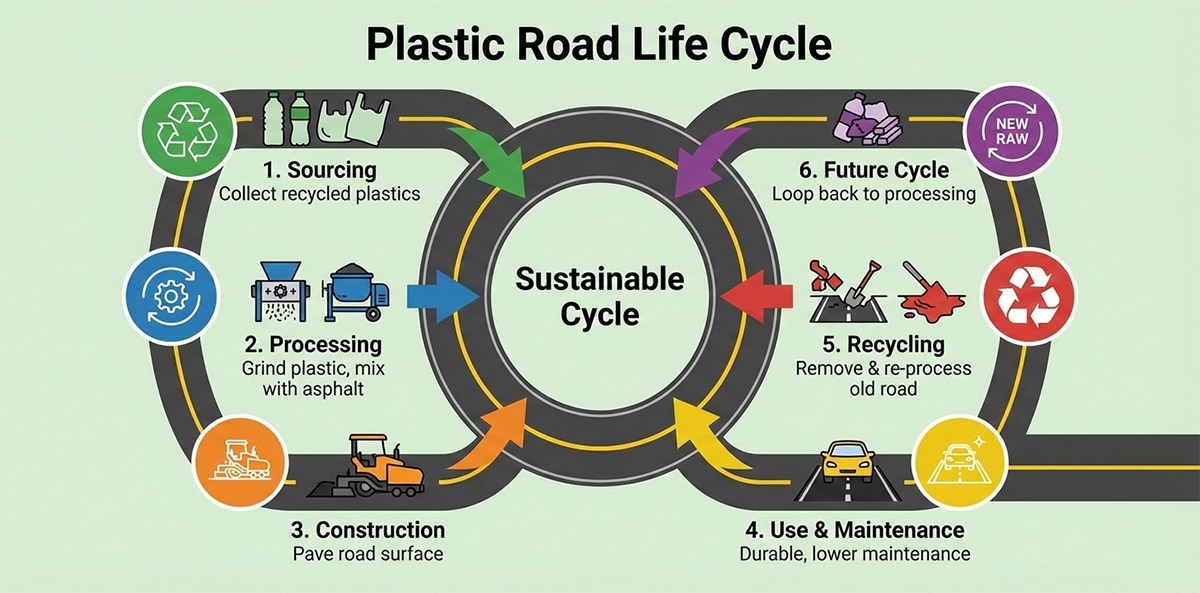
This approach repurposes plastic bags, bottles, wrappers and hard to recycle items by keeping them out of oceans and landfills.
Cost Effective
Maintenance life is nearly doubled, thereby requiring less servicing than traditional asphalt or concrete – making such construction significantly more affordable than conventional pavements in the long run.
Look Ahead
As manufacturers are continuing to develop and test novel sustainable solutions, plastic roads present a practical step toward decreasing plastic waste while improving roadway performance. Ongoing research efforts into possible substitutes, reconditioned composites and bio-based additives will further help to refine and expand this valuable resource.
Companies across Europe, Asia and now North America have successfully demonstrated the potential plastic has on boosting road conditions and helping to eliminate harmful refuse. As viable applications increase, injection molding is expected to play an important role in paving the way for ecofriendly infrastructure advances.


