
March 24th, 2026
In plastic injection molding, aerosols play a key role in maintenance and daily operations. Mold releases, rust preventives, cleaners and lubricants all help to keep lines flowing and equipment working properly. When used carelessly, overspray can quietly drive up costs and create inconsistency. Small deviations like this are easy to overlook, yet over repeated cycles, they can add up to significant operational expenses. The goal is to understand why and where waste occurs, how to manage it, then utilize aerosols correctly to optimize performance.
Where Waste Happens
Overspray
One of the biggest sources of solvent waste is overspray. Many operators assume that using more is better, though that’s not the case. Excessive coverage not only expels more of the product than necessary but lands on unintended parts, creating additional tasks down the line or surplus residue. Aggressive treatment in the moment may seem convenient and only a few cents extra but can translate to thousands of dollars lost over time.
The practical approach is to apply a thin coat first, just enough to release the mold or protect surfaces. If additional coverage is needed, a second pass can be applied with better control rather than saturating the mold initially.
Leakage
A leaking canister is another common pain point during production. In most cases, the root cause for this isn’t the product itself, but the sprayer system. Tips or nozzle heads that aren’t matched to their appropriate formulation can change spray patterns and flow rates, leading to poor coverage.
Active ingredients rely on the delivery to be set up for best match. If you notice inadequate coating or dripping, check nozzles, seals and attachments. Replacing compromised parts most often resolves the problem.
Poor Technique
Technique is just as important as the product itself. If you apply from too far away, you’ll get misting or uneven excessive buildup. If you’re too close, you risk pooling and thick accumulation.
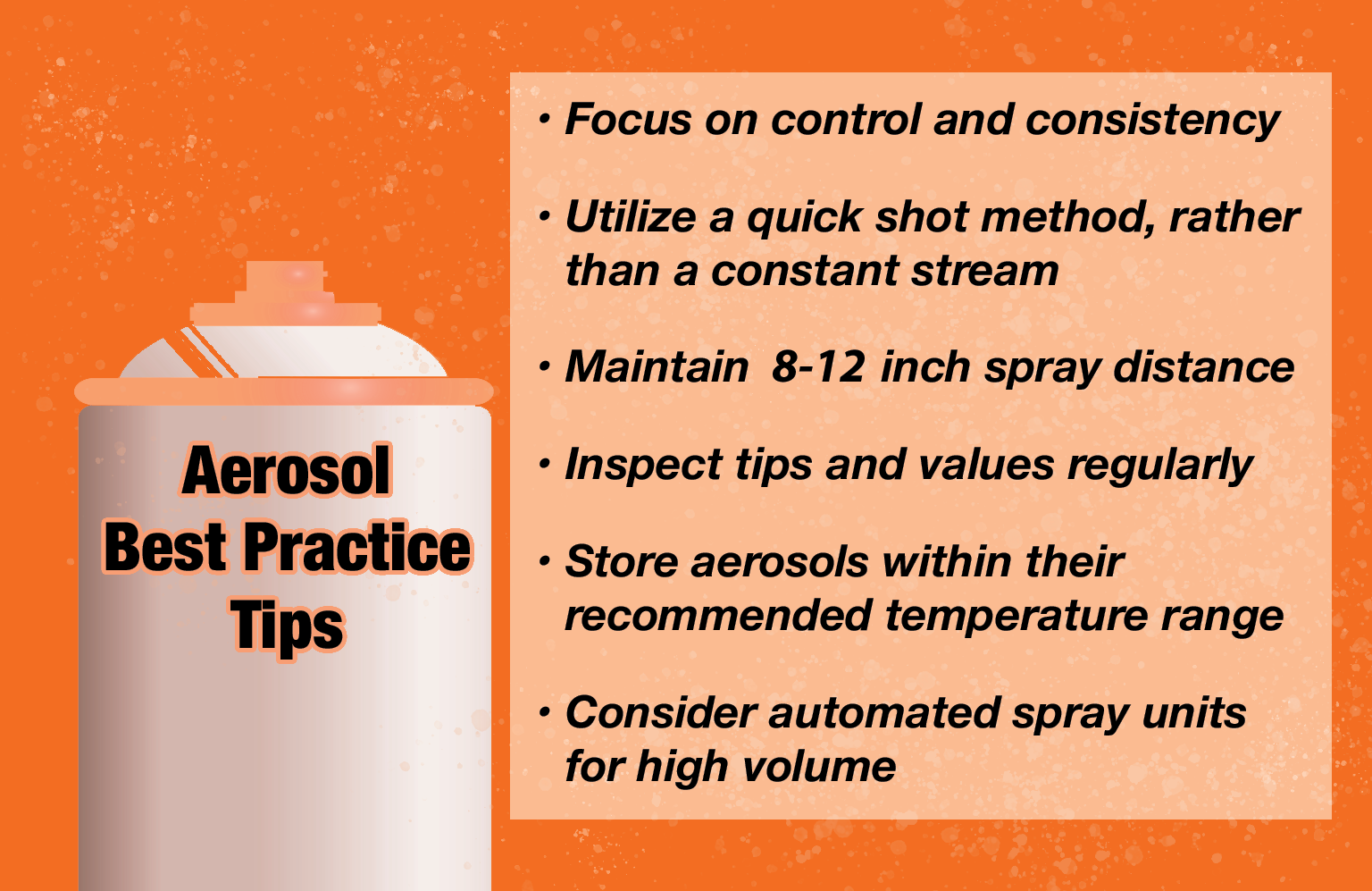
A general rule of thumb for distance is to aim roughly 8-12 inches away. You should start with several short bursts rather than holding down the button continuously to achieve an even coating. Focus on dispersing on only the intended surface and avoid wide sweeping motions that can increase residue.
Storage and Handling Issues
Where aerosols are stored directly affects how they function. Exposure to extreme temperatures or improper storage can degrade performance and shorten shelf life.
Keep containers in recommended conditions as provided by the manufacturer. Cans should be placed upright and in a well-ventilated area. Regularly inspect stock for dents, corrosion or any signs of damage before use. Accurate labeling and rotation also help in preventing deteriorating formulations.
Equipment and Valve Factors
Tip and Valve Design
Spray tips play a critical role in determining spraying pattern and flow rate. Matching the tip and valve to a can’s formula is essential for consistency and control. Loose, damaged or worn push buttons and seals can disrupt dispersion and cause incongruous layering depth.
Alternative Delivery Systems
Automated spray units offer better command and precision, enabling repeatable application, especially valuable in bulk or repetitive cycles. Mechanized systems work autonomously and without needing much manual management. If your project includes sequential presses or high-volume cycles, considering a product like this could minimize long term product utilization.
Reducing aerosol overspray isn’t just about eliminating excess product consumption – it’s also about how to use the right amount the right way. Small improvements in application methods, equipment maintenance and storage practices can significantly reduce unnecessary expenses overall. Identifying these common waste points is the first step toward enhancing aerosol efficiency in injection molding production.


