
July 21st, 2026
Pattern Washing: An Expensive Industry Habit
For many casting facilities, washing wax patterns before applying the primary ceramic coating has always been part of the standard routine. The goal is simple – to remove contaminants, increase slurry adhesion and produce a high-quality finished casting.
These wax patterns are exact replicas of their corresponding metal component. Any debris that makes contact will likely have a negative effect on its ceramic shell counterpart, which is why cleanliness during this stage is crucial.
Although it may seem necessary to do, washing them often isn’t solving the core problem. In some cases, it’s only required when mold release leaves behind residue. Instead of eliminating the source of impurity, this adds another labor-intensive step, introduces variability and ignores a root cause. It’s important to ask why cleaning was needed in the first place, not how to make the purification phase more efficient.
Risks of Pattern Washing
While pattern washing is a surface enhancement, the procedure may introduce several hurdles that can eat up profit margins:
Moisture Contamination
Residual moisture on undried patterns can contaminate the primary coat, causing chemical inconsistencies that compromise the entire batch.
Dimensional Changes
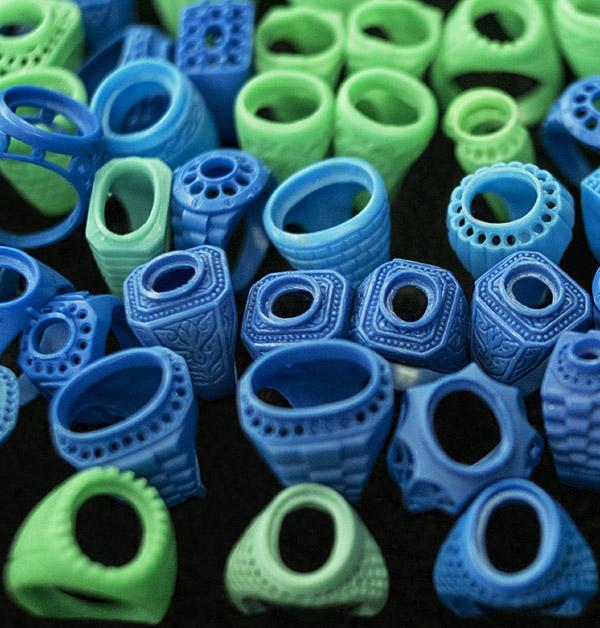
Investment wax patterns often contain intricate features, thin walls and tight tolerances. Over-handling can threaten to distort delicate areas, compromise structural integrity and impact final quality.
Additional Work and Longer Cycles
Every wash cycle calls for more labor, drying time, handling and inspections. Over hundreds or thousands of runs, those few extra minutes can quickly accumulate into hours of lost production time.
How to Avoid Pattern Washing Entirely
In many cases, pattern washing is only necessary because the mold release used during injection produces residues that can interfere with ceramic bonding. Rather than stopping production to remove at each occurrence, it makes more sense to prevent this from happening altogether. By addressing the root point of pollution, parts can move straight to slurry coating and avoid unnecessary labor.
What Mold Release Should I Use?
Not every product is designed for casting. Traditional silicone-based agents usually require an extra clean-up before dipping because the silicone can cause interference with coatings.
Low-residue, silicone-free and water-soluble releases are specifically formulated for investment wax casting applications. By choosing the right product for injection, you may be able to simplify and optimize reliability throughout your operation.
Benefits
Optimize Uptime
Removing the cleaning process yields faster cycle times from start to finish, reduces the need for additional procedures and enables patterns to move efficiently through production.
The Magic Ingredient – Polyethylene Glycol (PEG)
Unlike standard silicone mold releases, PEG-based formulations are water soluble and easier to wipe away, enabling direct dipping straight out of the mold into the first ceramic slurry.
No Ash Content During Burnout
When it’s time for the shell to be dewaxed and fired, the PEG burns off completely without leaving behind ash or carbon deposits, helping to produce a flawless surface finish.
Recommended Casting Solutions
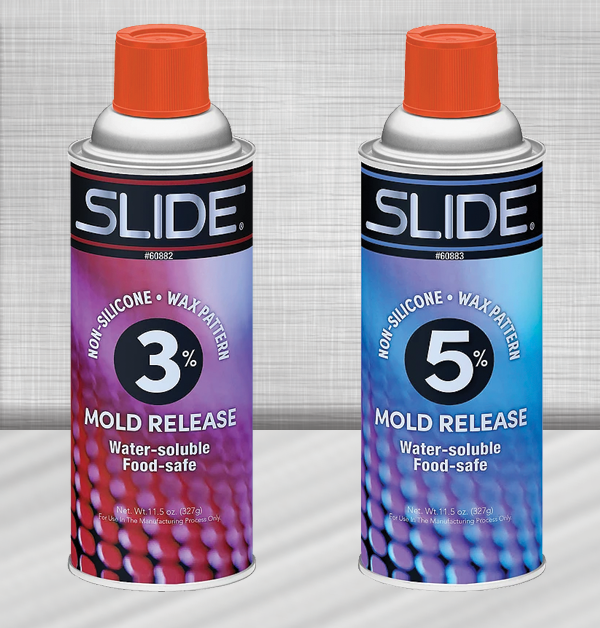
To help you skip the extra purification step without sacrificing quality, Slide Products offers unique formulations specifically made for investment casting:
Non-Silicone Wax Pattern 3% Mold Release (No. 60882): A lighter solvent best for simple geometries
Non-Silicone Wax Pattern 5% Mold Release (No. 60883): A higher concentrate great for complex geometries
Switch to Slide Tool
If your current mold release requires more washing before dipping, use our handy Switch to Slide Tool or to find the perfect solution for your production setting.


