
October 20th, 2026
For plastic injection molders, reducing resin consumption sounds straightforward: just use less of it. But taking plastic out of an existing design can introduce a whole new set of problems, from reduced rigidity to products that no longer function as intended.
With growing pressure to lessen packaging waste and meet EPR goals, merely thinning walls seems like the easiest way to cut back on usage. However, take away too much polymer and a part becomes flimsy, difficult to handle or fails to withstand the demands of its application.
The challenge isn’t just figuring out how to use less plastic – it’s understanding where material is crucial, qualify if reduction is possible and does the part need to be as large as it is in the first place.
Lightweighting vs. Rightsizing: What’s the Difference?
Although these terms are sometimes used interchangeably, each approach material reduction from different angles.
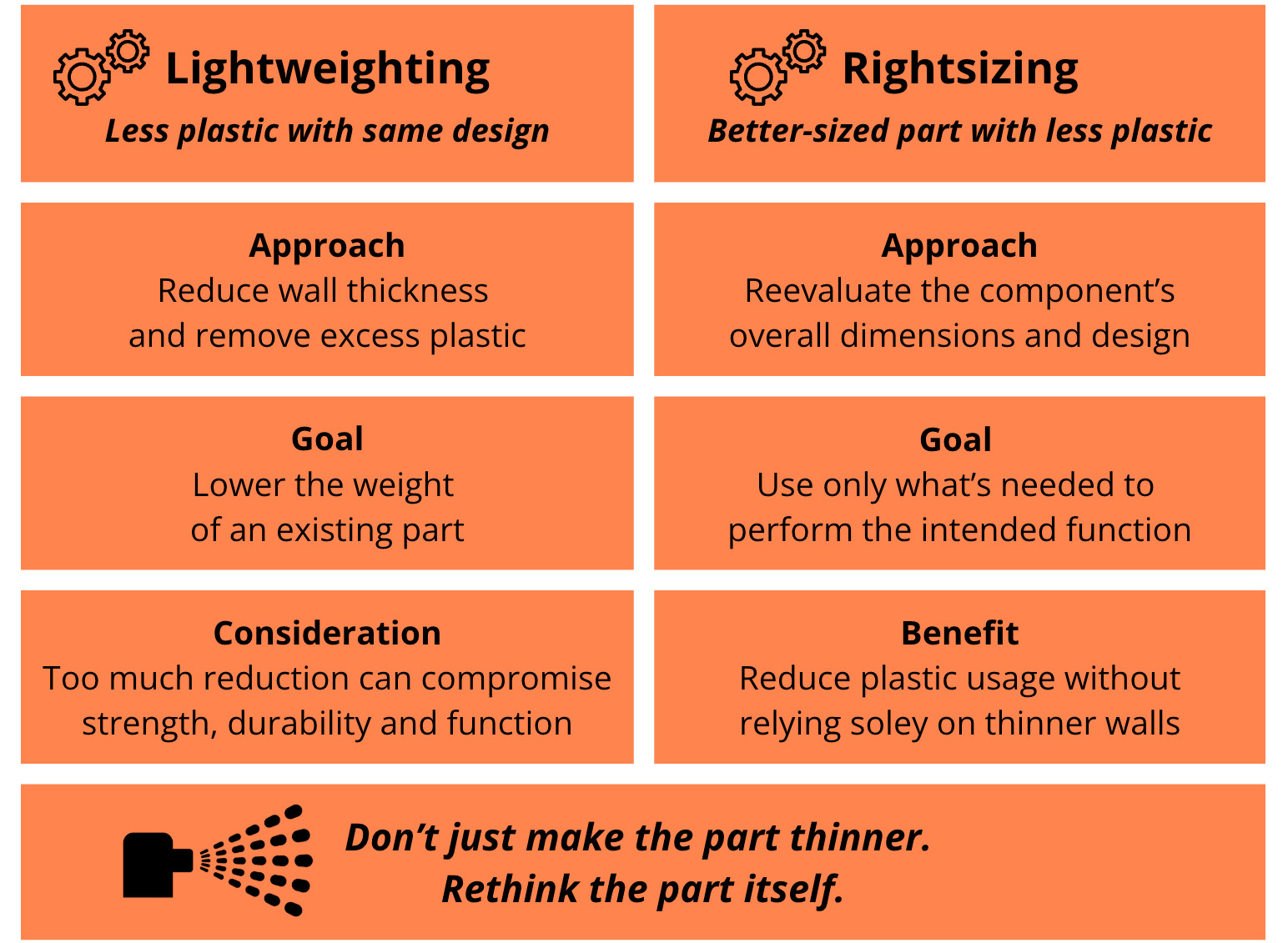
Lightweighting focuses on decreasing mass of a product or component. This concept gained traction within the automotive industry, replacing heavier metal elements with lighter counterparts (such as plastic) to reduce the vehicle load and improve fuel economy. When it comes to packaging, lightweighting involves lowering the overall amount of resin utilized to produce the same part, such as thinning the walls of a plastic bottle.
However, there’s a limit to how much material may be eradicated before performance suffers. For example, a disposable water container might use less resin, but it becomes flimsy and simply squeezing it could open the cap and cause water to spill, hindering its purpose.
Rightsizing takes a broader look at the whole schematic and intended function. Rather than focusing exclusively on diminishing a wall thickness, it must include the part’s overall dimensions, geometry or configuration so appropriate adjustments can be made to eliminate unnecessary bulk.
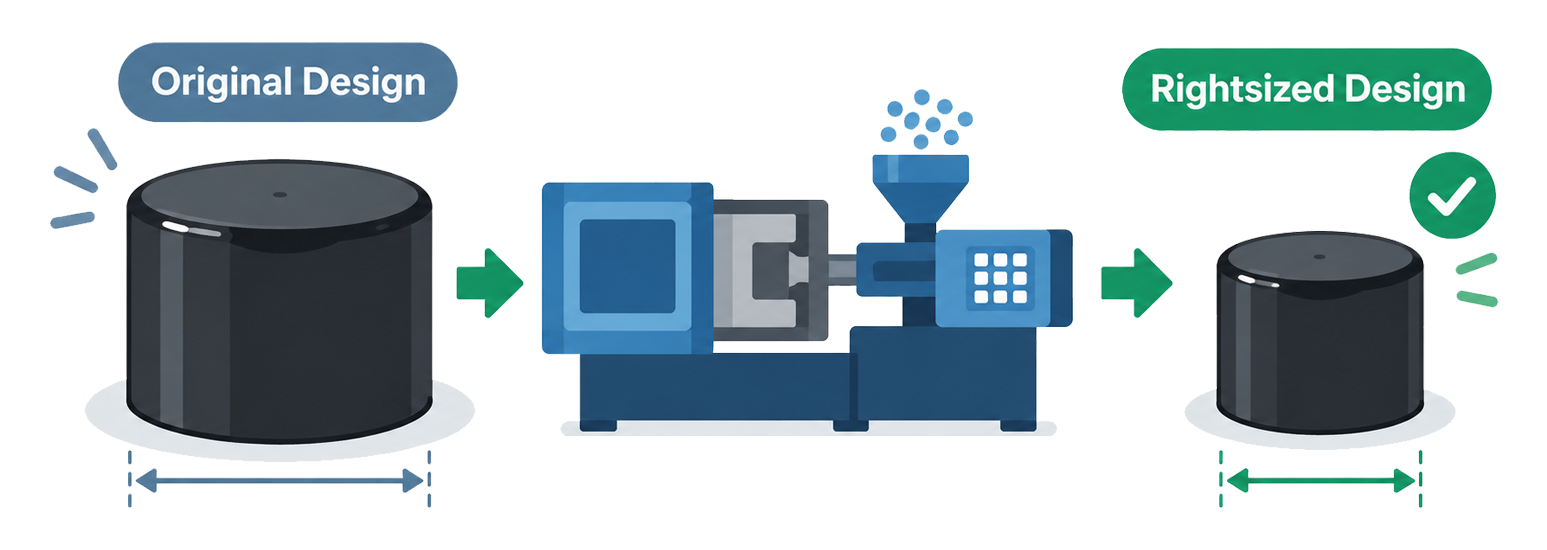
Think of a plastic aerosol can cap – instead of shrinking overall footprint, a manufacturer might decrease the cap’s height or footprint to create a smaller piece that still fits properly and acts as intended.
Both approaches slash usage, but rightsizing emphasizes sourcing a suitable volume for the job rather than removing plastic wherever doable.
Where Rightsizing Makes a Difference
Minimizing substance without sacrificing quality starts with understanding what a component is meant to do. Before modifying an existing design, it’s important to consider a few opportunities:
Reconsider Overall Dimensions
The first question shouldn’t be “How can I make this part thinner?” Instead, ask “Does this have to be sized like the original?”
Decreasing a component’s total height, width or footprint can lower resin consumption without relying entirely on thinner walls. This is particularly relevant for packaging items, where excessive measurements may add bulkiness without offering meaningful serviceable benefits.
The key is ensuring that any revised dimensions still accommodate product operation, fit the assembly and meet operational requirements. A smaller part isn’t always better if it doesn’t work correctly or creates problems.
Simplify the Design
Some products contain features or extra matter that adds little to usefulness. Reviewing an overall design opens options to streamline geometry, discard areas that aren’t essential and consolidate components into a single section.
However, not every rib, support or structural feature is expendable. Taking away material without knowing its intent results in weak points, general instability or failure. Project changes should envision how the part will be manufactured, constructed, managed and used throughout its lifecycle.
Identify Where Material Is Necessary
All sections of a molded part don’t have the same purpose. Certain expanses hold more stress, support critical connections or necessitate additional loadbearing properties to maintain underlying integrity.
Simulation tools and resin flow analysis can aid in identifying large stress spots and evaluate which adjustments affect resin distribution. This emphasizes places where substance can be minimized while maintaining sections supporting strength and performance.
How Slide Approached Rightsizing
Our aerosol container caps represent a practical example of what rightsizing accomplishes. Making the transition from a 17-gram cap to a more compact 2.5-gram topper reduced the weight by 85%. This changeover aimed at lowering height, instead of just using thinner walls.
This is a great illustration showcasing a distinction between removing material from an existing product and re-evaluating the design itself. When certain aspects can be optimized while sustaining the expected intent, noteworthy savings are likely without relying solely on lessening walls.
The Right Balance
Shrinking plastic use doesn’t have to degrade your finished parts. But achieving recognizable savings requires more than altering an existing plan to make something smaller hoping it holds up.
Rightsizing encourages stepping back and evaluates every component to adequately predict the desired outcome. By inspecting ratios, refining form and recognizing where strength is genuinely vital, you will know how to use less resin but still generate quality products that perform how customers expect them to.
As EPR requirements continue to put bigger emphasis on waste reduction, understanding the difference between deleting material and rethinking your blueprint can help you make smarter decisions about how to create meaningful enhancements wherever viable in your process.


