

July 7th, 2026
The U.S. plastic manufacturing sector has been showing promising signs of momentum. According to recent industry reports, production has expanded at its fastest pace in three years. For injection molders, that’s great news as orders start to fill up again.
However, it also means manufacturers are operating in a much different economic environment than just a few years ago. Producer prices have recently climbed 6.6%, their highest level since 2022, while energy, transportation and raw material costs continue to rise. The numbers listed in these reports translate directly into daily molding operations, creating challenging financial pressures throughout the industry.
What Does the Current Market Mean for Molders?
Everything costs more – which means every mistake amplifies more, too.
As expenses intensify, the cost of poor maintenance extends far beyond the price of wasted resin alone. Scrap, downtime and labor progressively become more expensive–especially as the Producer Price Index has recorded its largest increase since 2009. This makes proactive maintenance a necessity for remaining competitive and profitable.
Manufacturing Growth Doesn’t Cause Problems, It Magnifies Them
During slower production periods, minor hiccups are easier to manage. An extra purge or a little scrap at startup is inconvenient, but in times of high demand, those same issues quickly get costly.
The difference rears its ugly head when machinery is running continuously. Since cycles occur more frequently and schedules get tighter, it leaves little room for delays or avoidable downtime. Those minor inconsistencies that once blended into the background begin compounding, eventually affecting output, delivery schedules and profitability:
Excessively Long Purge Times
Additional material usage and lengthy halts come about because of waiting for a clean run.
Mold Contamination
Outgassing, residue buildup, flash-off and plate-out contribute to part defects and lead to waste.
Worn Ejector Pins
Slow or difficult part ejection generates friction, ruins quality and hinders a consistent result.
Rust During Startup
Improper shutdown or storage methods could damage tooling and negatively affect the initial components.
Separately, these problems may not seem catastrophic but quietly compounding them can be one of the largest sources of avoidable loss on the shop floor.
What Molders Can’t Control
Manufacturers have little influence over many of the economic stressors:
- Energy costs
- Resin and raw material pricing
- Fuel, shipping and freight expenses
- Tariffs and global trade policies
- Supply chain disruptions
What Molders Can Control
Even with a plethora of external forces, operational proficiency remains at the forefront to achieving the most optimal performance for the greatest return. The key areas to focus on include:
- Reducing unneeded purging intervals and material usage
- Extending tool life and minimizing scrap by keeping molds clean
- Preventing corrosion from shutdown through storage
- Improve startup predictability and lowering first-shot mistakes
- Active regular maintenance before failures happen instead of reacting later
What These Inescapable Trends Mean on the Shop Floor Today
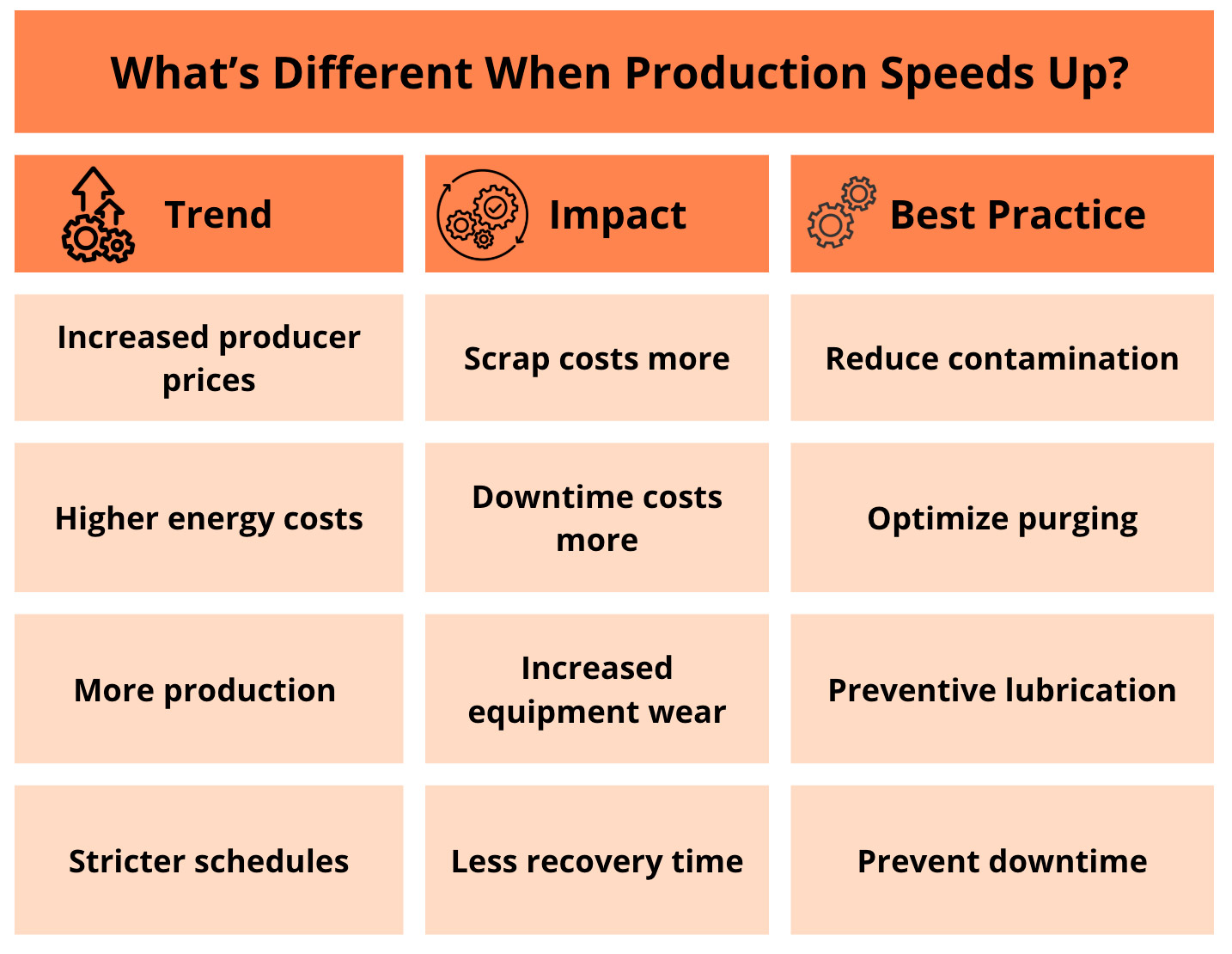
Highest Resin Prices since 2022
Every batch of resin holds a higher value currently than previously. Curtailing waste from purging and streamlining startup have become more important than ever.
Energy Costs Went up 10.7% In a Single Month
Each unnecessary machine interruption, extra purge or a minute of downtime uses up surplus profit margins if the required results aren’t consistently reached.
Order Requests Persist
More orders mean more sequences, accelerated wear on molds/components and less room to recover from unexpected disruptions.
Production Scheduling is Stricter
Being offline no longer impacts a single shift – it can trickle through to hold-ups in deliveries and hurt productivity.
Small Maintenance Improvements for Bigger Returns
Today’s plastic injection molding manufacturing recognizes and awards reliability. As production volumes continues to grow and costs rise, the tiniest processing concerns creep up and produce the biggest financial troubles.
Manufacturers cannot control the economy. But what they can manage is how well their operations work and respond to such snags with pre-determined strategies.
Maintaining clean molds, mitigating contaminants, optimizing purging practices and addressing problems before they become disastrous strengthens operational performance immensely. When each run carries a greater value, preventing the minor annoyances delivers the largest return.


