
September 22nd, 2026
For injection molders, standardized maintenance routines keep machines moving. Cleaning cavities, regreasing slides, inspecting parting lines and spraying rust preventives are essential daily steps for staying efficient in such a fast-paced environment. However, treating every mold with the same methodology – regardless of the polymer running through it – is a recipe for a costly mess.
When molds start to wear out, vents clog or cavity surfaces begin pitting, it’s easy to treat the symptom right away: scrub the metal again, replace the pins or repolish the core. But experienced molders know that if you only fix the warning sign without addressing how resin interacts with tooling, you will continue to pay to solve the same symptom.
Not All Resins Are Created Equal
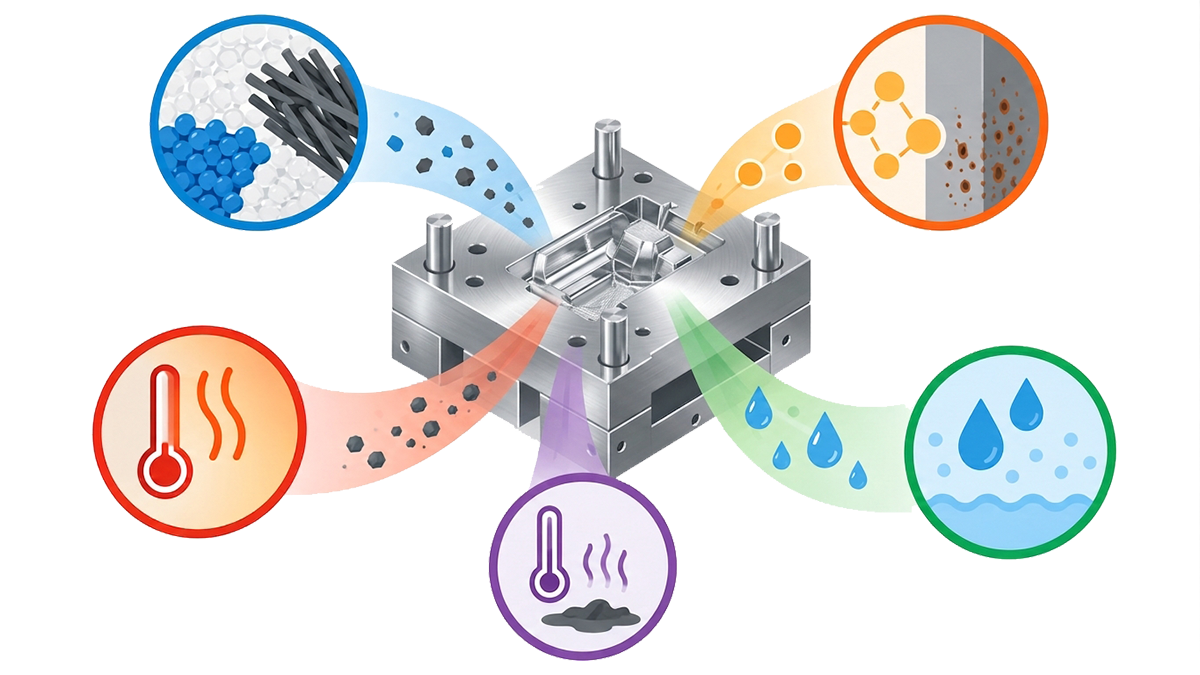
Plastics don’t all behave identically under every production condition. Factors that dictate how a resin reacts to your tooling include:
- Additives and Fillers – Increases mechanical abrasion
- Chemical Outgassing – Releases corrosive vapors
- Thermal Degradation – Leaves behind resin deposits
- Moisture Sensitivity – Reduces viscosity, causing flash or drool
To protect your investment and minimize unplanned downtime, make sure to tailor your upkeep strategy to the specific material being utilized.
Abrasive and Filled Resins Increase Wear
(Glass-Filled Nylon, PBT, Carbon Fiber)
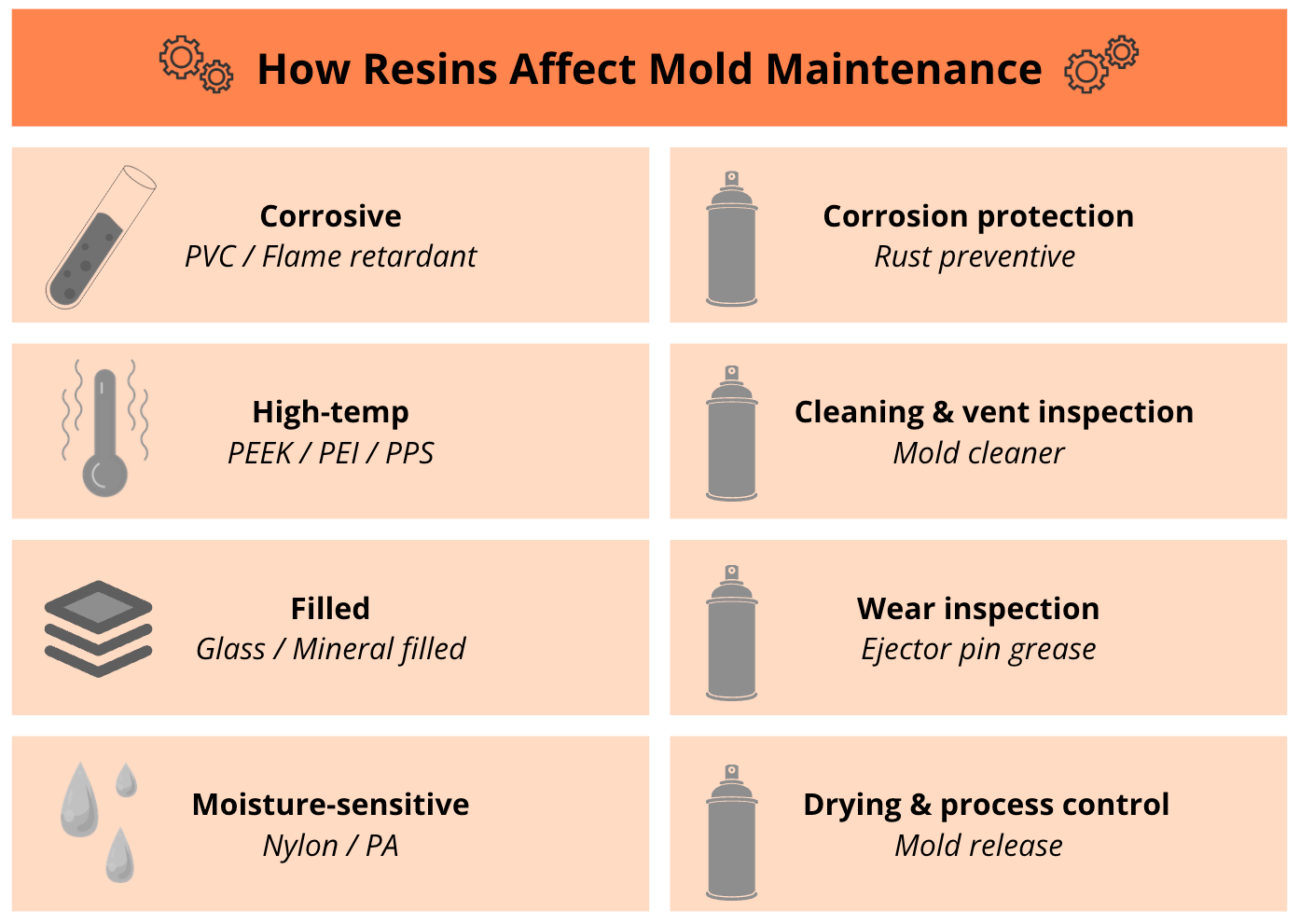
Glass fillers, carbon fibers and other reinforcers heighten abrasion under elevated pressure. Over repeated runs, this added friction acts like fine sandpaper – wearing out surfaces, gates, runner systems and sections exposed to constant movement and material flow. The unwelcome result might mean oversized or worn gates, part rejection, galling pins and expensive refinishing or replacements.
Solutions
- Increase inspection intervals on higher wear zones like gates, vents and slides.
- Use a heavy-duty, hot temperature ejector pin grease that won’t burn off or migrate to safeguard against galling.
- Purge immediately prior to shutdown and during resin changes to address residue before it sets in the hot runners or barrels.
Corrosive Resins Need Added Protection
(PVC, Fluoropolymers, Flame-Retardant Resins)
Certain formulations introduce corrosion threats that go beyond visible buildup. For example, PVC emits hydrochloric acid gas if thermally degraded, while flame-retardant additives can off-gas and form acids when encountering cool steel. This causes pitting on polished cavities, rusted vent lines and damaged surfaces – all while the mold sits idle or during storage.
Solutions
- Cleanse with a degreaser or cleaner adequate for stripping away tough resin and chemical residue
- Apply an acid neutralizing rust preventive to protect tooling before it is stored
- Keep a close eye on melt temperatures to avoid thermal degradation and the formation of corrosive gases
High-Temperature Resins Intensify Residue
(PEEK, PEI/Ultem, PPS)
When processing temperatures are elevated, heat accelerates material breakdown and outgassing. This leaves behind film deposits on cavities, parting lines and vents that restrict airflow and cause short shots, burn marks and other defects.
Solutions
- Choose maintenance products that are engineered for extreme temperature applications.
- Routinely inspect and keep vents clean to avoid buildup that could restrict airflow.
- Use an appropriate high-temp purging compound during material changes to clear out thermal deterioration.
Moisture Sensitive Resins Need More Control
(Nylon, PC, ABS, PET)
Hygroscopic resins have a stronger attraction to ambient moisture in the air. This absorption negatively affects the polymer’s properties and performance. For example, nylon is often used because of its tensile strength and toughness, but excess water molecules can foster drool or flash, thus creating a pressure drop and spoiling the final output.
These materials require strict attention to drying parameters. Understanding the original moisture content can help you determine an appropriate drying time and protect surfaces from flash and weeping.
Solutions
- Store sensitive resins in properly sealed areas when not in use
- Follow recommended drying constraints to ensure the polymer is completely dehydrated before processing
- Monitor dampness levels and maintain clean, dry hoppers, loading lines and tool surfaces to preserve integrity
Find the Perfect Fit
Selecting the right mold maintenance products starts with understanding the resin, tooling and processing criteria involved. Asking why the problem happened, rather than just treating the symptom is the best way to stabilize your operations, optimize cycle times and protect your bottom line.
Slide Products offers mold cleaners, rust preventives, mold releases, purging compounds and high-temperature lubricants designed to match your unique production demands. If you are unsure which product best fits your application, utilize our Switch to Slide Tool or contact our molding experts to discuss your specific application. Our team of experts can work with you to find the most appropriate products to match your set-up.


